mindfulness@fallingawakenow.com
mindfulness@fallingawakenow.com


So what is mindfulness?
Mindfulness has many definitions. For us, it always comes back to the renowned Professor of Medicine, Jon Kabat-Zinn. He is famous for fusing ancient Buddhist philosophy with cutting-edge neuroscience research and introducing non-religious ‘mindfulness’ to a wider Western audience.
Working with colleagues world-wide, he helped bring mindfulness into so many areas of human life - medicine, psychology, health care, schools, sport, business, justice systems, law, the military and governments.
“Simply put, mindfulness is moment-to-moment, non-judgemental awareness…
of whatever is happening, even if things have shaken your life or seem overwhelming …
letting things be, and feeling them.”
Jon Kabat-Zinn
Mindfulness can be really life-changing!
Living a life in in peace, in thriving, in healing really does depend on us having the capacity to stop, to take a breath and to notice.
text - tbc
Quote - tbc
text - tbc
Despite sometimes being promoted as a silver bullet for all life's stresses and challenges, there are many misconceptions around mindfulness...
The primary goal is to increase awareness and clarity.
Whilst it can bring calmness and be relaxing, it can at times be uncomfortable. Learning to sit with discomfort can be liberating though!
Rather than trying to force a blank mind, it’s about noticing what is here, right now. Not avoiding problems or emotions but approaching them with self-compassion and curiosity.
Mindfulness is not therapy. It's not about analysing what might come up for us and striving towards goals. Mindfulness-based courses are often used in therapeutic and healthcare settings though, teaching skills to manage life’s challenges.
It’s very common for people to find mindfulness a bit difficult or frustrating when first starting out. Like anything new that we’re learning, it takes practice to feel the benefits.
We always talk about ‘practising’ rather than ‘doing’ mindfulness, even if we’ve been meditating for a long time and it’s become much more familiar. We never suggest that ‘practice makes perfect’ though.
Whenever and however we practice mindfulness, whatever happens is just that.
And that's always okay.
"Wherever you go, there you are."
Jon Kabat-Zinn
There are many ways to bring mindfulness into our daily lives, all of which seek to increase our awareness and clarity by bringing moment-to-moment focus. Mindfulness is simply a way of stepping out of 'automatic pilot' and giving ourselves the gift of some space and time.
Formal meditation practice means setting aside anything from a few minutes to much longer periods, ideally in a quiet place where our body feels supported. We don't have to set strict boundaries or book out time in a diary though. We bring awareness to a particular aspect of our experience, say our breath, body, thoughts and feelings, or we might focus on something external like a candle or clock face, or the broader world around us.
We may also use visualisation, such as evoking the immersive experience of being in a summer meadow, imagining the sights, sounds, smells and other sensory impacts of that setting.
Informal mindfulness brings more ad-hoc, spontaneous opportunities to step out of the 'busyness' of the day and anchor ourselves in the present moment. It can be practiced anywhere at any time, even for just a couple of minutes. Again, we could choose to focus on our breath, or we might bring attention to what we happen to be doing just now - work, personal care, housework, exercise, hobbies, driving.
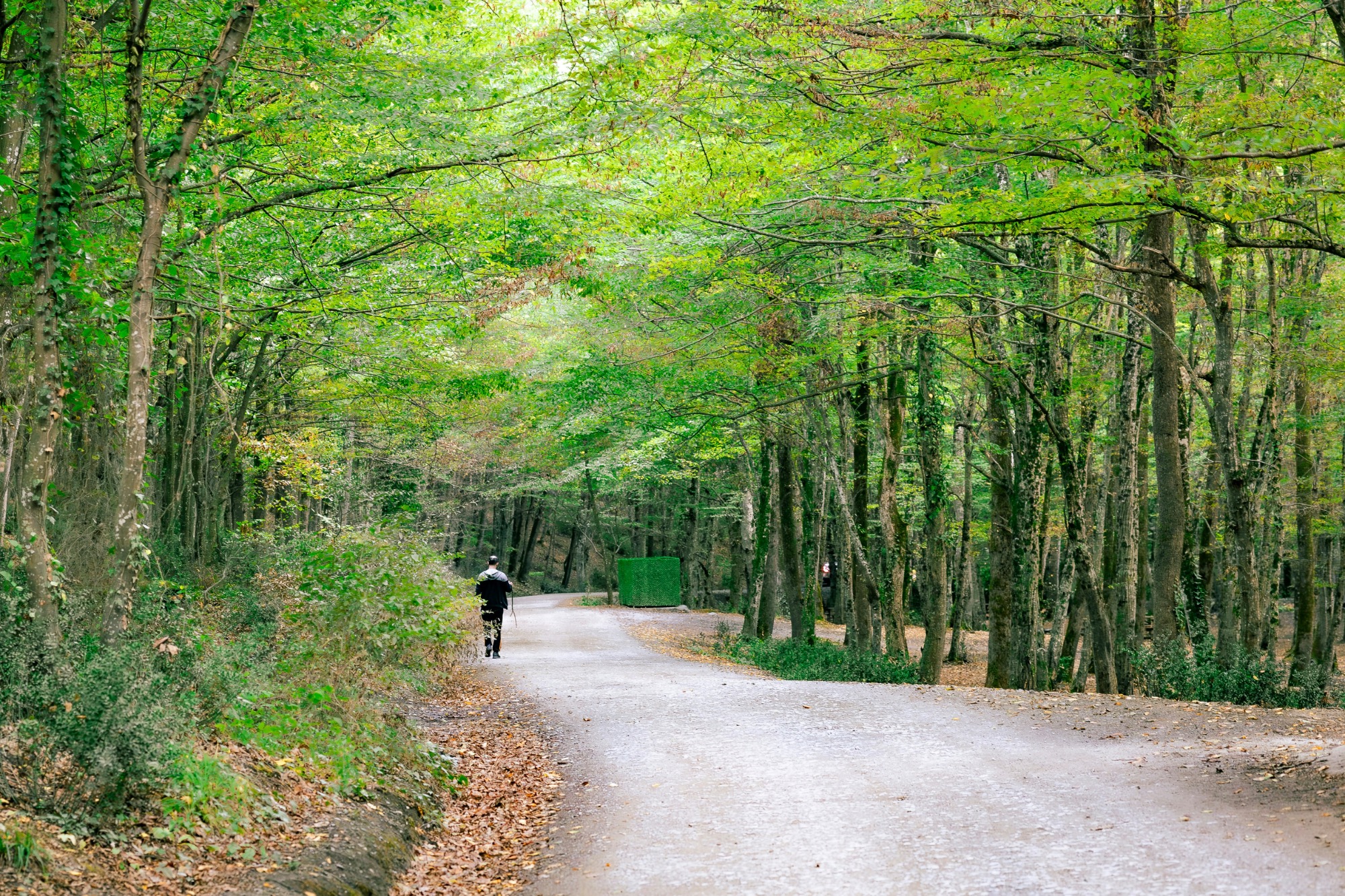
Engaging with the five senses is a great tool here. Try mindful knitting! Being with the texture, colours, smell of the wool; the rhythmic clicking of the needles; witnessing the emerging creation right in front of you. Or mindful walking! Feeling your feet on the ground, the wind in your hair; noticing the sights, sounds and smells as they come and go; maybe stopping to feel what's around you - foliage, bark, sand, pebbles.
Adopting a more general mindful way of being is yet another option, say becoming more ‘present’ in our relationships, actively listening to friends and loved ones. Mindful eating brings awareness to the food choices we make, or body signals about hunger or fullness. We can switch on all our senses when exploring, preparing and savouring our food.
We need your consent to load the translations
We use a third-party service to translate the website content that may collect data about your activity. Please review the details in the privacy policy and accept the service to view the translations.